
Coinbase Trading Bot: Complete 2026 Guide to Automated Crypto Strategies on Coinbase Advanced
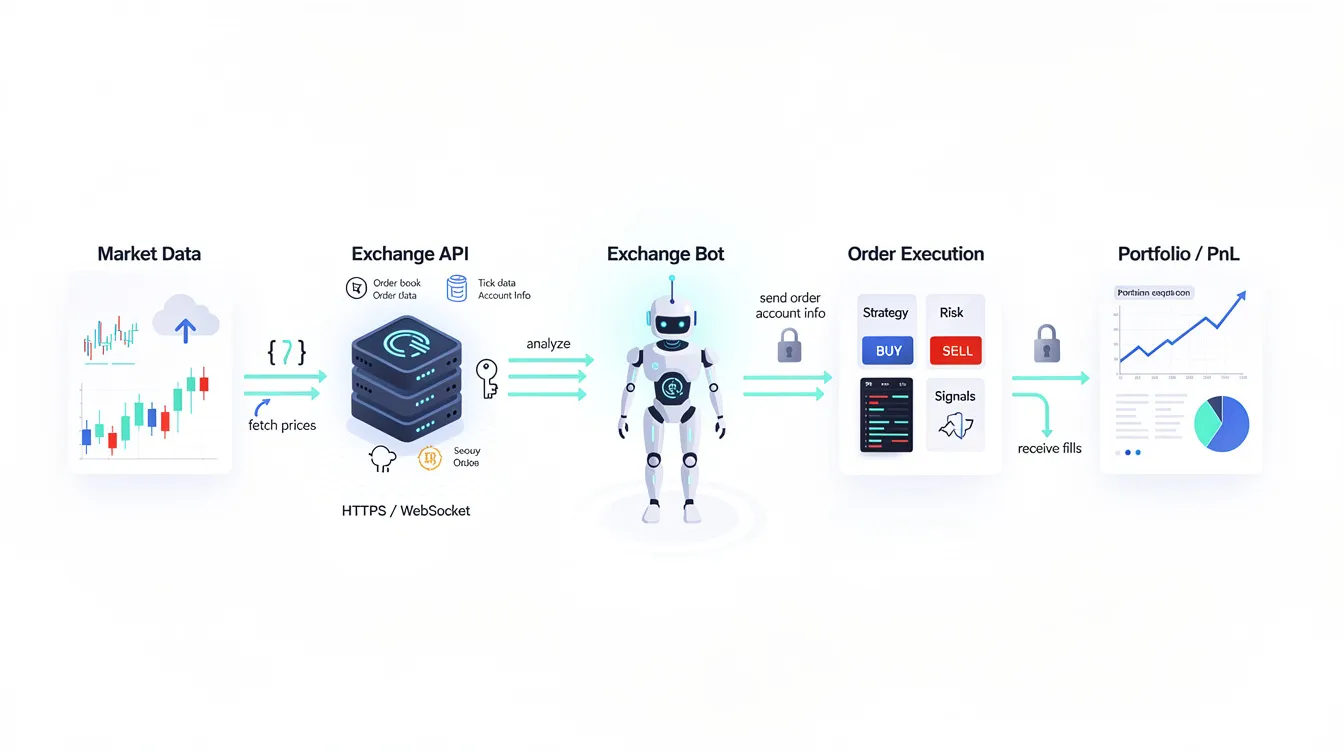
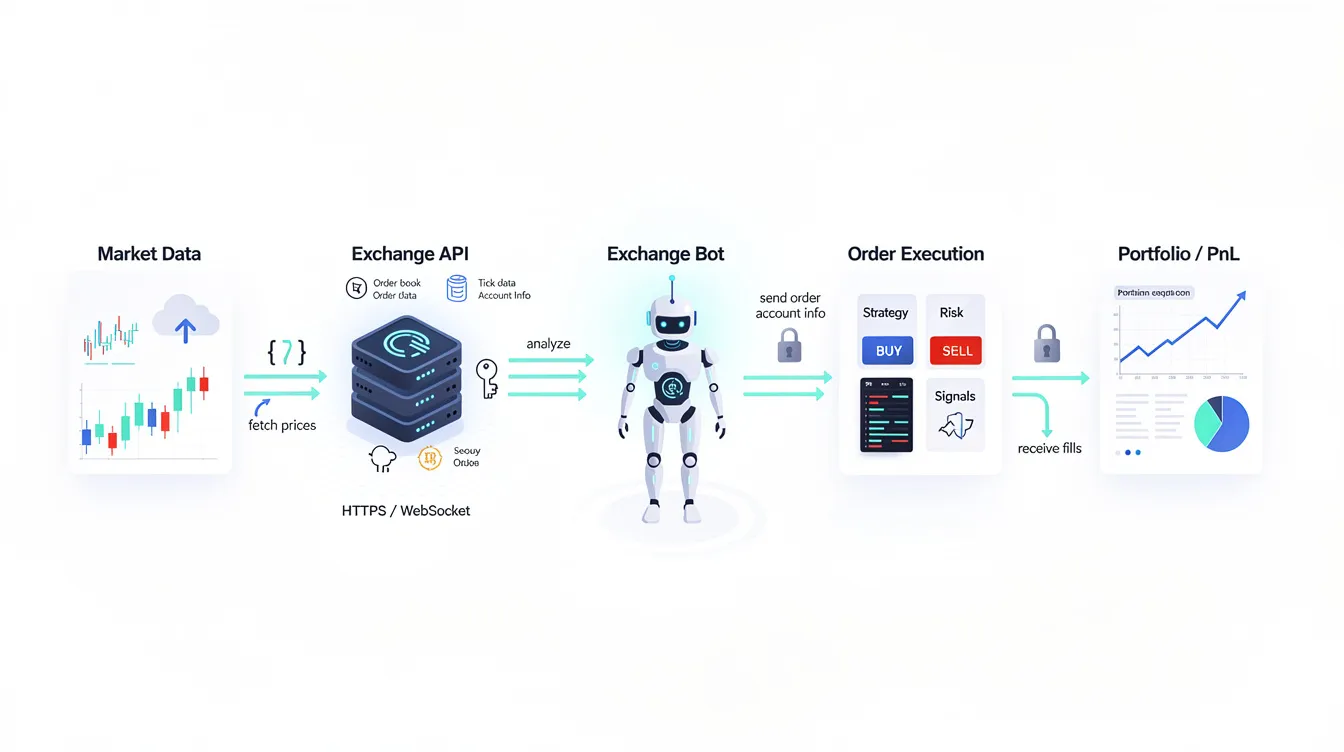
A coinbase trading bot is third-party software that connects to Coinbase Advanced via API to execute trades automatically based on predefined rules or AI models. Since Coinbase Advanced launched in late 2022 as the successor to Coinbase Pro, automated trading bots have surged in popularity among individual investors seeking 24/7 execution in a market that never sleeps.
Coinbase itself does not provide native bots. Instead, the platform offers secure API access that allows external services like SaintQuant to send trade instructions while users retain full custody of their digital asset holdings. This architecture means your funds stay on the exchange under your control—the bot only reads market data and places orders.
This guide is for traders who want risk-aware, rules-based automation rather than get-rich-quick schemes. You’ll learn how bots work on Coinbase Advanced, explore strategy types (DCA, GRID, trend following, arbitrage), walk through setup steps, and understand how SaintQuant’s AI crypto trading bot delivers quant-driven strategies with built-in risk management.
How a Coinbase Trading Bot Actually Works
Understanding the mechanics helps you evaluate any service provider before connecting your accounts.
Coinbase Advanced operates under Coinbase, Inc., a company founded in 2012 and listed on NASDAQ (COIN) since April 2021. The platform provides API endpoints that allow programmatic access for reading balances, fetching real time order book data, and placing various order types—all without the bot holding your private keys or funds.
The core workflow:
-
Generate API credentials (key, secret, passphrase) in Coinbase Advanced settings
-
Bot connects and pulls market data via REST or WebSocket
-
Strategy logic evaluates rules or ML models
-
Bot sends buy/sell orders to Coinbase Advanced
-
System monitors positions, PnL, and adjusts as conditions change
Classic rule-based bots follow static logic—fixed DCA intervals or predetermined GRID levels. AI/quant bots like SaintQuant’s platform adapt position size and signals using machine learning trained on historical and real time data, improving performance across different market conditions.
Relevant order types include limit, market, stop-limit, take-profit, post-only (avoids taker fees), and IOC (immediate-or-cancel). Good bots combine these for execution quality—using post-only limits for grid layers while employing trailing stops for dynamic exits.
Popular Coinbase Trading Bot Strategies (DCA, GRID, Trend Following, Arbitrage)
Four strategy archetypes dominate the coinbase trading bot ecosystem. Each serves different market participants with distinct goals and risk tolerances.
|
Strategy |
Best For |
Market Condition |
Complexity |
|---|---|---|---|
|
DCA |
Long-term accumulation |
Any |
Low |
|
GRID |
Range-bound profits |
Sideways |
Medium |
|
Trend Following |
Capturing moves |
Trending |
Medium-High |
|
Arbitrage |
Exploiting gaps |
Any |
High |
DCA Bots on Coinbase Advanced
Dollar-cost averaging suits traders focused on long-term accumulation of BTC, ETH, and top-10 coins without trying to time price movements. You set a fixed USD amount, choose an interval, and the bot handles execution.
Configurable parameters:
-
Asset (BTC-USD, ETH-USD, SOL-USD)
-
Interval (daily, weekly, monthly)
-
Order size ($10-$10,000)
-
Maximum slippage tolerance
-
Optional take-profit or rebalancing rules
Example: A user starts a 12-month ETH DCA plan in January 2026, buying $200 weekly via a bot connected to Coinbase Advanced. Backtests suggest this approach can reduce cost basis by 10-30% compared to lump-sum investment during volatile cycles.
SaintQuant enhances pure DCA by dynamically pausing or increasing contributions based on volatility clusters and trend strength—an innovative approach that adapts to changing market conditions.
GRID Trading Bots on Coinbase Advanced
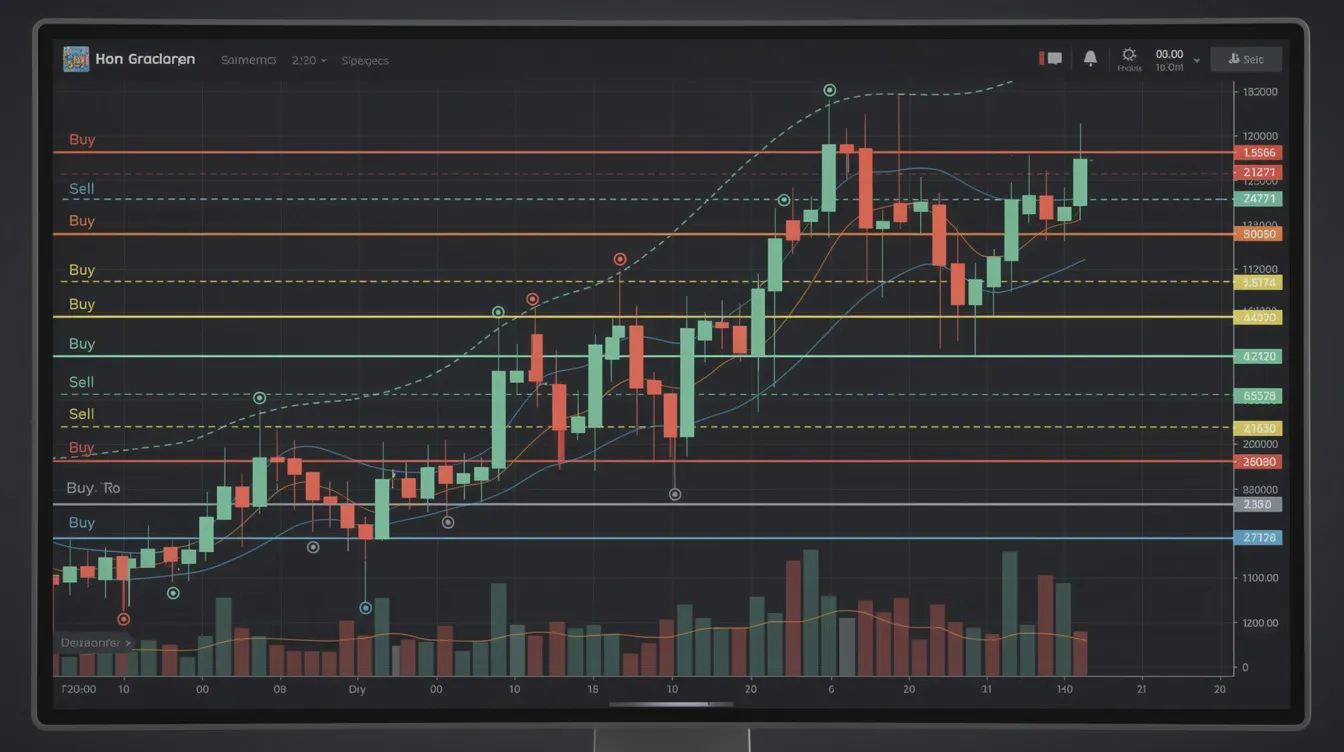
GRID trading thrives in choppy, sideways cryptocurrency market conditions. The bot splits a price range into multiple levels, placing buy orders below current price and sell orders above, profiting from oscillations.
Ideal configuration for ETH-USD:
-
Upper bound: $3,400
-
Lower bound: $2,800
-
Grid levels: 50
-
Capital per grid: minimum $5-10 (meeting Coinbase minimums)
-
Auto-shutdown on 5%+ range breach
This strategy works best on liquid pairs with 2-5% daily volatility. Users should assess fee impact—Coinbase Advanced charges maker fees of 0-0.40% depending on 30-day volume.
While SaintQuant focuses on quant and AI models, users can layer classic GRID logic with SaintQuant’s risk controls that auto-shutdown during strong trends or flash crashes.
Trend-Following and AI Quant Bots on Coinbase
Medium-term trend-following systems enter positions when price breaks above moving-average bands and exit via trailing stops or reversals. These strategies attempt to capture sustained price movements rather than micro-swings.
AI/ML models add sophistication by classifying market regimes (bull, bear, sideways) and adjusting exposure accordingly. SaintQuant uses machine learning for signal modeling with feature sets derived from:
-
Order book imbalance data
-
Volatility clustering patterns
-
Cross-asset correlations
-
Historical OHLCV on 4H and 1D timeframes
Supported assets: BTC-USD, ETH-USD, SOL, and AVAX on Coinbase Advanced, with strict risk parameters enforced regardless of signal strength.
Arbitrage and Market-Making Style Bots
Crypto market making and arbitrage represent more advanced strategies requiring significant capital and low latency execution.
Pure arbitrage exploits price gaps between cryptocurrency exchanges—for example, a 0.5% BTC-USD differential between Coinbase Advanced and another venue. The bot executes near-simultaneous buying on one exchange and selling on another.
Requirements for profitability:
-
Capital: $10,000+ minimum
-
Latency: <100ms execution
-
Fees: Must exceed 0.2% gaps post-fees
-
Multi-exchange accounts
Market makers provide liquidity by placing bidirectional quotes around mid-price with tight spreads, earning maker rebates. This demands sophisticated inventory management to avoid directional risk during sudden price movements.
SaintQuant’s infrastructure runs institutional-grade arbitrage strategies, while retail investors access them through curated ROI plans rather than building complex systems themselves.
Setting Up a Coinbase Trading Bot Step by Step
Security and compliance matter when connecting third-party software to your exchange accounts.
Account prerequisites:
-
Verified Coinbase account (KYC completed)
-
Coinbase Advanced trading enabled
-
2FA activated (preferably YubiKey)
-
Region eligibility (US, EU, UK available in 2026)
Generating API keys:
-
Navigate to Profile → API → Create API Key
-
Grant only “trading” and “view” permissions
-
Never enable withdrawal permission
-
Optionally whitelist IP addresses
-
Store credentials securely
Connecting to SaintQuant:
-
Paste key/secret/passphrase into encrypted form
-
Verify connection by pulling balances
-
Select pair (e.g., ETH-USD)
-
Choose strategy template
-
Set risk level and review backtest stats
-
Launch live trading

Choosing the Right Bot Platform for Coinbase
Evaluate potential platforms against these criteria:
-
Security track record and SOC2 compliance
-
Strategy transparency (can you see backtest methodology?)
-
Risk controls and drawdown caps
-
Support quality and response times
-
Regulatory attitude and non-custodial architecture
Many traders previously used generic bot platforms but are shifting to AI-driven quant services for better risk-adjusted returns. SaintQuant focuses on Coinbase-friendly, quant-researched strategies with transparent ROI plan structures—90-day, 180-day, and 365-day plans with defined target ranges rather than guaranteed returns.
Avoid platforms promoting high-leverage gambling, opaque Martingale schemes, or unrealistic profitability claims. Reputation matters in this industry.
Risk Management for Coinbase Trading Bots
Automation without risk controls is dangerous. The crypto market saw BTC peak at $69,000 in November 2021 then drop over 70% in 2022, with 15-20% daily swings common during stress events like the Luna and FTX collapses.
Position sizing rules:
-
Maximum 1-5% portfolio risk per trade
-
Diversification across BTC, ETH, and vetted altcoins
-
No more than 20% allocation to any single asset
Stop loss implementation:
-
Fixed stops at 5-10% below entry
-
Trailing stops using 2-3x ATR
-
Volatility-based position reductions during extreme moves
Order type optimization:
-
Post-only orders to avoid taker fees in low liquidity windows
-
Stop-limit instead of pure market orders
-
IOC for partial fills when speed matters
SaintQuant’s built-in risk engine enforces daily loss limits, maximum drawdown caps, and auto-de-risking when models detect stress events like large order book imbalances.
Realistic expectations: Bots improve consistency and discipline but cannot eliminate risk or guarantee profit in every market regime. Industry data suggests well-configured bots deliver 0.8-1.5 Sharpe ratios in favorable conditions while experiencing -10% or worse in bear markets.
Common Mistakes with Coinbase Trading Bots
Avoid these errors that amplify losses:
-
Over-allocating capital to a single pair
-
Running high-frequency GRID bots on illiquid altcoins with low liquidity
-
Chasing recent backtest winners without walk-forward validation
-
Granting withdrawal permissions on API keys
-
Sharing credentials through unsecured channels
-
Emotional override—manually interfering mid-drawdown
Schedule periodic reviews (weekly or monthly) rather than constant micromanagement. Systematic processes deliver stability over time.
SaintQuant’s AI Coinbase Trading Bot Solutions
SaintQuant operates as a subscription-based AI crypto quant trading platform focused on responsible automation for Coinbase Advanced users.
Supported strategy families:
-
AI-driven trend following on BTC/ETH majors
-
Volatility-aware DCA bundles
-
Low-risk arbitrage strategies
-
Diversified quant portfolios across risk appetites
Plan structure examples:
-
90-day “Conservative BTC/ETH Quant”
-
180-day “Balanced Multi-Asset”
-
365-day “Aggressive Growth Altcoin Basket”
Each plan specifies target ROI ranges—not guaranteed returns—with machine-learning signal models, risk caps (maximum daily loss percentage, portfolio VaR bands), automatic exposure scaling, and continuous monitoring.
SaintQuant never takes custody of user funds. All assets remain on Coinbase Advanced under your control, with SaintQuant only sending trade instructions via restricted API keys.
|
Feature |
Simple DCA Bot |
SaintQuant AI Bot |
|---|---|---|
|
Interval |
Fixed |
Adaptive to volatility |
|
Risk Controls |
Manual stops |
Automated VaR bands |
|
Signal Source |
Time-based |
ML regime classification |
|
Multi-asset |
Limited |
Full portfolio management |
Who SaintQuant Is For
Target user profile: Individual crypto investors familiar with Coinbase who understand basic trading concepts and risks but lack time or expertise to operate complex quant systems themselves.
SaintQuant is not for people expecting risk-free “passive income.” It serves those seeking improved risk-adjusted returns and disciplined automation.
Example client profiles:
-
US-based engineer allocating a portion of BTC/ETH holdings into a 180-day quant plan
-
EU-based trader diversifying from manual day trading into automated strategies
-
Investors with $10,000-$100,000 portfolios seeking growth without constant monitoring
Start with smaller allocations and conservative plans before scaling once comfortable with bot behavior on Coinbase Advanced.
Pricing, Plans, and Getting Started
SaintQuant uses a subscription model with tiered plans based on features, active strategies, and portfolio size.
|
Tier |
Monthly Price |
Active Strategies |
Portfolio Limit |
|---|---|---|---|
|
Starter |
$29-49 |
2-3 |
$10,000 |
|
Standard |
$59-79 |
5-7 |
$50,000 |
|
Pro |
$99-149 |
Unlimited |
$250,000 |
Differentiation by tier includes access to advanced AI models, reporting depth, and support SLAs.
Onboarding flow:
-
Complete verification if required
-
Link Coinbase Advanced via API
-
Choose plan and strategies
-
Set risk level
-
Go live
Monitoring and Optimizing Your Coinbase Bot Over Time
Track performance using meaningful metrics rather than just absolute PnL:
-
Equity curve progression
-
Maximum drawdown percentage
-
Sharpe-like ratios
-
Win rate and profit factor
SaintQuant dashboards display real time PnL, attribution by asset and strategy, and alerts when risk thresholds approach.
Best practices for scaling:
-
Conduct quarterly strategy reviews
-
Gradually increase capital after several months of live data
-
Don’t scale immediately after short winning streaks
-
Rebalance across strategies based on performance attribution
Conclusion: Is a Coinbase Trading Bot Right for You?
A coinbase trading bot makes sense for users with clear investment goals, foundational trading knowledge, and desire for systematic, rules-based execution. The benefits are tangible: 24/7 execution on Coinbase Advanced, removal of emotional bias, diversification across strategies and assets, and improved risk discipline.
However, cautions remain. Market risk persists regardless of automation. Past performance—whether backtests or live results—doesn’t guarantee future returns. Users must size positions responsibly and understand that even sophisticated AI models face regime shifts.
SaintQuant offers a next step for readers interested in AI-powered quant trading on Coinbase. Explore plans, review strategy documentation, and consider starting with a small, conservative allocation to experience how automated trading bots operate in real market conditions.
The world of AI in crypto trading continues evolving through 2026 and beyond. Coinbase users can participate via regulated, risk-aware automation platforms that prioritize transparency over hype—building sustainable growth rather than chasing impossible guarantees.